Guidance, When You Need it.
Data Center Transport

Speak with a live specialist today

17
Years Delivering Results
30K
Carriers
125
Logistics Experts
Everything You Need To Know About Data Center Transportation
 0 min read
|

Moving data center equipment isn’t standard freight. Servers, preconfigured racks, UPS systems, and large-scale power infrastructure each carry different handling requirements, weight profiles, and delivery constraints. A shipment that arrives at the wrong time, to a site that isn’t ready, or without the right trailer on the ground can set a project back by days or weeks.
Nationwide Transport Services coordinates data center equipment transport across the United States and worldwide. Whether you’re transporting IT hardware between facilities, delivering generators and switchgear to a new build site, or managing a phased relocation across multiple locations, every shipment starts with a thorough assessment. That means equipment review, route planning, securement strategy, and delivery coordination before a single truck is dispatched.
NTS handles both the sensitive and the oversized, from a single rack to a full infrastructure move.
Call (877) 278-3135 to speak with a logistics specialist, or request a quote to get started.
What Is Data Center Equipment Shipping?
Data center equipment transport covers the freight movement of the physical infrastructure that powers modern computing environments. That includes everything from individual servers and preconfigured rack systems to large-scale power and cooling components that require specialized handling from origin to delivery.
Most data center projects involve multiple freight categories moving on different timelines. A single facility build or migration can include:
- Servers and preconfigured racks
- Cooling systems and CRAC units
- Industrial generators
- Transformers and switchgear
- UPS systems and battery cabinets
- Networking and cabling infrastructure
- Modular data center components
- Construction and electrical equipment
Each category carries its own weight class, fragility level, and delivery requirement. A rack shipment moving into an operational colocation facility needs white-glove handling and a scheduled delivery window. A generator headed to a construction site needs a flatbed, confirmed site access, and possibly a crane on standby. Grouping these under one logistics plan is exactly what NTS coordinates.
Transportation for New Data Center Construction
Building a data center from the ground up involves a freight timeline that runs parallel to the construction schedule. Equipment doesn’t arrive all at once. Generators, transformers, and structural components come from different manufacturers, ship from different origins, and need to land on-site in a sequence that matches what the construction crew is ready to receive. Getting that sequence wrong means equipment sitting on a job site with no place to go, or a crew standing by with nothing to install.
NTS coordinates multi-vendor delivery scheduling for new data center construction projects. That means working with your project manager to map out which equipment ships first, which vendors need appointment windows, and which deliveries require staging before they reach the final install point. Sites under active construction rarely have clean access. Tight entrances, unfinished loading areas, and shared driveways with other contractors all factor into how a delivery gets planned.
Just-in-time delivery matters here. Transformers and large cooling systems can’t be dropped in a field and left exposed. Delivery windows get built around installation readiness, not just shipping availability. For oversized equipment, route permits and site access confirmations happen before dispatch, not after.
Phased deployments get the same treatment. Each phase gets its own delivery schedule, its own equipment checklist, and its own coordination plan.
Data Center Expansion and Relocation
Not every data center project starts from scratch. Facilities expand, equipment cycles out, and organizations consolidate infrastructure across multiple locations. Each of these scenarios creates a freight challenge that’s different from a standard delivery run.
Expansion projects often mean adding capacity to a live facility. That creates a hard constraint most carriers don’t plan for: deliveries can’t disrupt operations. Scheduling matters more than speed. Equipment coming into an active data center needs to arrive during approved access windows, move through the building without damaging raised floors or doorframes, and reach its destination without pulling staff away from critical systems.
Equipment refreshes add another layer. Decommissioned servers, retired UPS systems, and outdated networking hardware all need to move out while new equipment moves in. Coordinating both directions of freight on a documented schedule prevents gaps and avoids situations where a facility is left holding hardware it can’t place.
Data center-to-data center transport requires route planning between two controlled environments, each with its own delivery requirements, access restrictions, and scheduling contacts. NTS builds a documented delivery schedule for each leg of the move, tracks equipment chain of custody across the full transit, and coordinates with both origin and destination facilities before anything is loaded.
Phased relocation gets mapped out in advance. Each phase has its own timeline, its own equipment list, and its own confirmation process.
How Data Center Equipment Is Transported
Data center freight doesn’t move on assumption. Every shipment goes through a structured process before a truck is assigned, because the variables involved, equipment dimensions, weight distribution, site conditions, and delivery timing, all affect how the move gets executed.
- Equipment and Shipment Assessment
The process starts with a full review of what’s moving. Weight, dimensions, fragility, special handling requirements, and origin and destination conditions are all documented before anything else happens. - Dimensions and Weight Verification
Declared specs don’t always match real-world measurements. NTS verifies weight and dimensions independently, particularly for large infrastructure components where a few inches or a few thousand pounds changes the trailer and permit requirements entirely. - Trailer and Handling Equipment Selection
Sensitive IT equipment typically moves in air-ride enclosed trailers. Heavy infrastructure requires a different approach. Flatbeds handle standard oversized loads. Step decks and double drops work for equipment with height restrictions. RGNs and extendable trailers come into play for the largest components like modular data center buildings or prefabricated electrical rooms. Multi-axle configurations get used when weight distribution across the trailer needs to stay within legal axle limits. - Route, Permit, and Site Access Planning
Oversized shipments don’t just get routed by GPS. Low clearances, weight-restricted bridges, state permit requirements, and pilot car regulations all shape the route. Site access at both ends gets confirmed before dispatch. - Packaging, Loading, and Securement
Equipment gets loaded and secured based on its specific profile. Rack systems need bracing. Generators need chaining patterns that account for their center of gravity. Nothing moves until securement meets the requirements for that specific load. - Shipment Monitoring
Active tracking stays on throughout transit. Delays, weather events, or route changes get communicated in real time. - Scheduled Delivery and Unloading Coordination
Delivery appointments get confirmed with the receiving facility ahead of arrival. Unloading equipment, dock availability, and crew readiness are all factored in before the driver rolls through the gate.

Popular Articles

Understanding Accessorial Charges in Freight Shipping
1 min read |
When it comes to freight shipping, the primary focus for most businesses is to ensure their goods travel safely and...


Freight Shipping Insurance: Protecting Your Cargo From Loss or Damage
1 min read |
When it comes to freight shipping, the primary focus for most businesses is to ensure their goods travel safely and...

Not sure where to start?
Our Transport specialists are here to help.
We’re here to handle all your transport needs
Each transport, from vehicles to superloads, is handled by a highly trained
shipping specialist. Contact our team today for smooth shipment and delivery!
Protecting Sensitive and High-Value Equipment
Server racks, networking hardware, and preconfigured IT systems aren’t built to absorb the punishment of a standard freight move. Road vibration, temperature swings, and improper securement can cause damage that doesn’t show up until equipment is powered on at the destination. By then, the shipment is long gone and the damage is difficult to trace back to a specific point in transit.
Air-ride trailers are the baseline for sensitive IT freight. The suspension system reduces road shock across the full length of the trailer, which matters on long interstate runs where vibration accumulates over hundreds of miles. Enclosed transport keeps equipment protected from weather, road debris, and unauthorized access from pickup to delivery.
Securement gets matched to the equipment. A rack system secured the same way as a pallet of boxed hardware will shift in transit. NTS uses equipment-specific bracing, blocking, and tie-down configurations based on the actual dimensions and weight distribution of what’s being moved.
GPS tracking stays active from dispatch through final delivery. If a shipment is delayed, rerouted, or sitting at a fuel stop longer than expected, that information is available without waiting for a driver check-in.
Chain-of-custody documentation travels with every high-value shipment. Controlled pickup and appointment-based delivery mean the equipment transfers hands in a documented, confirmed environment, not a rushed dock exchange with no record of who received what.
Oversized Data Center Infrastructure Transport
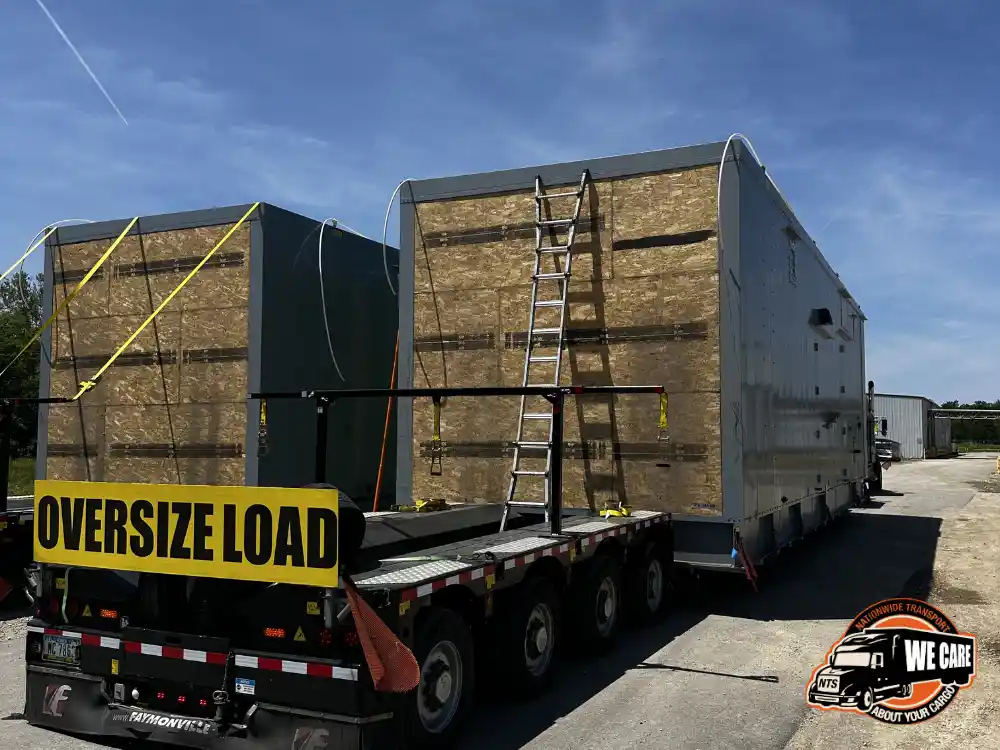
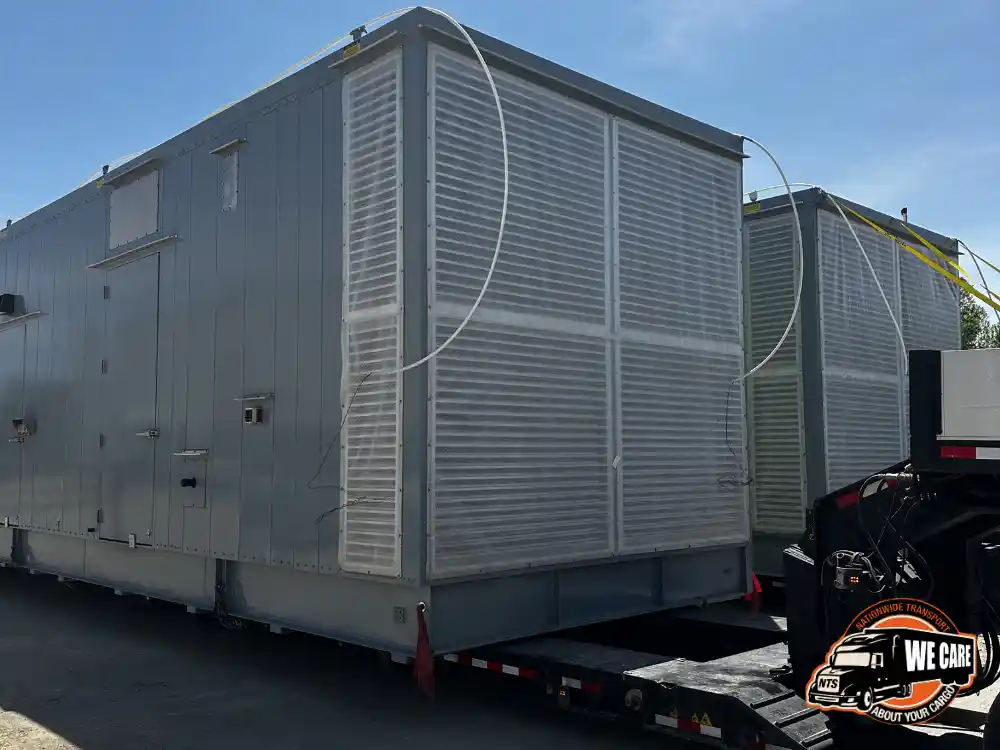
Some data center components don’t fit in an enclosed trailer. Industrial generators, large transformers, cooling towers, and modular data center buildings move as oversized freight, and that classification changes nearly everything about how a shipment gets planned and executed.
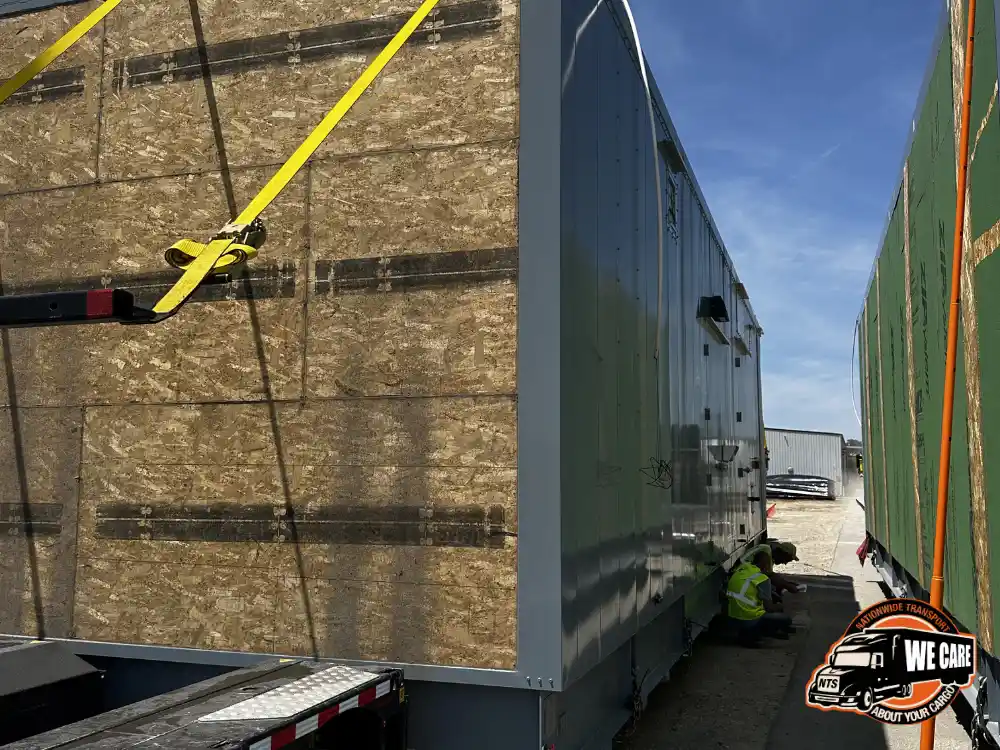
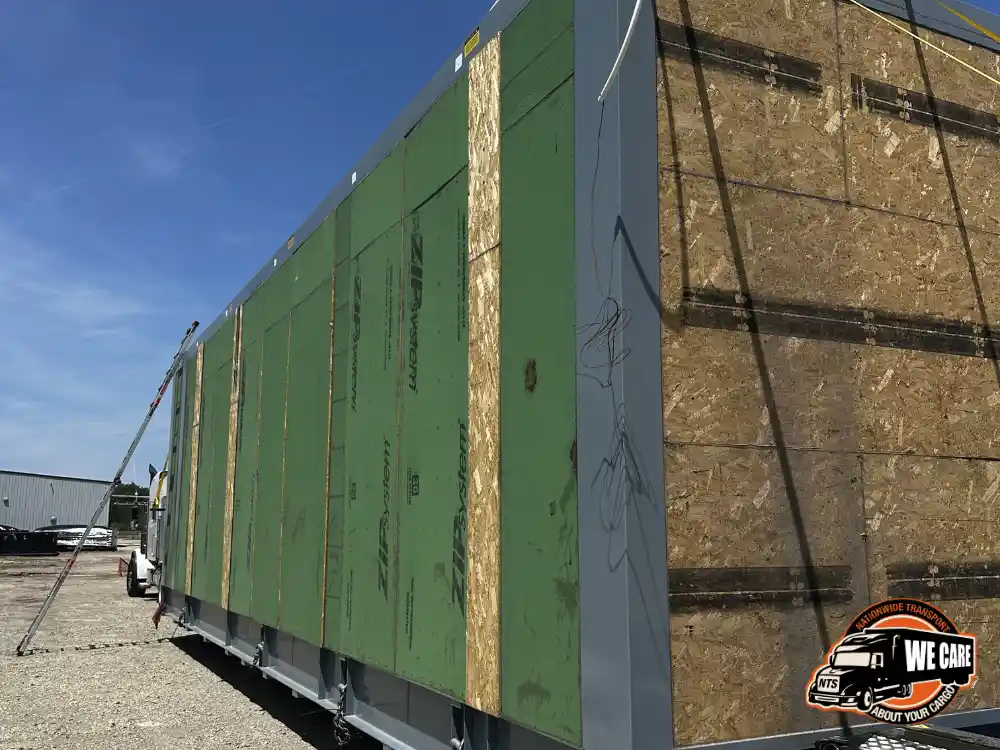
Generators headed to a new facility build can weigh anywhere from 20,000 to over 100,000 pounds depending on capacity. Large transformers carry similar weight profiles and add the challenge of fluid containment during transport. Cooling towers and chillers often exceed standard height and width limits, triggering permit requirements in every state they cross. Prefabricated electrical rooms and modular data center buildings push the boundaries further, sometimes requiring multi-axle trailer configurations, escort vehicles, and travel restricted to specific hours of the day.
Fuel tanks, structural steel components, and switchgear assemblies round out the oversized category. Each one has its own loading requirements, its own center-of-gravity considerations, and its own set of site delivery constraints.
Route planning for this equipment isn’t a GPS exercise. Low bridges, weight-restricted roads, utility lines, and state-specific permit windows all shape the path from origin to destination. A route that works in one state may hit a hard restriction fifty miles later.
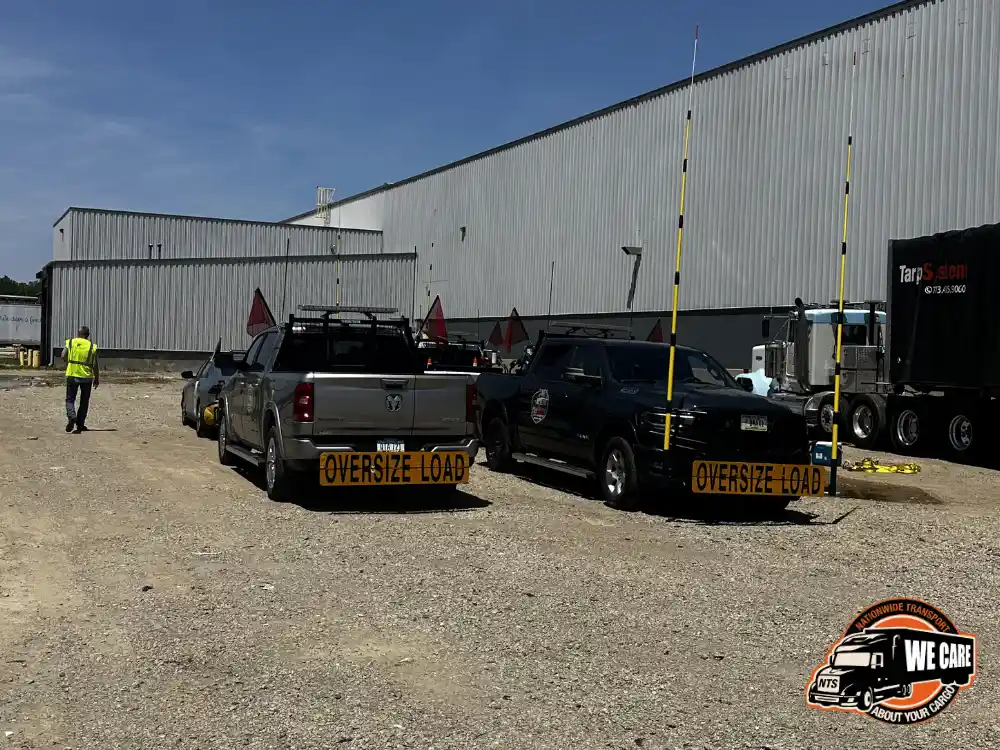
NTS manages permit acquisition, route surveys, escort coordination, and site access confirmation for oversized data center freight. Heavy infrastructure moves on a plan, not a guess.
Industries and Facilities Served
Data center freight spans a wide range of facility types and industries. Each comes with its own access requirements, scheduling constraints, and equipment handling expectations.
- Hyperscale Data Centers – High-volume builds and expansions with complex multi-vendor delivery coordination
- Colocation Facilities – Shared environments requiring strict appointment scheduling and controlled access
- Enterprise Data Centers – Corporate infrastructure moves and equipment refreshes with minimal disruption windows
- Cloud Computing Facilities – Rapid deployment timelines with phased equipment staging requirements
- Government and Defense Facilities – Secure handling, chain-of-custody documentation, and credentialed access compliance
- Financial Institutions – High-value equipment transport with strict delivery accountability
- Telecommunications Facilities – Network infrastructure shipping with precise installation sequencing
- AI and High-Performance Computing Centers – Sensitive, high-density hardware requiring specialized securement and climate-controlled transport
Expertise You Can Trust
Need specialized logistics services?
Our expert logistics agents have the solutions you need.
16+ years
23,000+ Carriers Nationwide
Why Choose Nationwide Transport Services for Data Center Shipping?
Data center freight doesn’t leave room for logistics gaps. Equipment is expensive, project timelines are fixed, and a missed delivery window can push an entire installation schedule back. The carrier you choose needs to understand what’s at stake before the truck leaves the yard.
NTS brings nationwide transportation coverage with the operational depth to handle both sensitive IT freight and heavy oversized infrastructure under one logistics plan. Oversize permitting, route planning, and escort coordination are handled in-house, not outsourced to a third party at the last minute. Every shipment gets assigned a dedicated logistics representative who knows the project details, the delivery schedule, and the site requirements from day one.
Trailers get selected based on the actual equipment, not availability. Securement gets planned before loading, not adjusted at the dock. GPS tracking stays active throughout transit, and delivery appointments get confirmed with receiving facilities ahead of arrival.
NTS has coordinated data center equipment shipping across the country. Call (877) 278-3135 or request a quote to discuss your project with a specialist.
Reliable Transport Starts Here
Our specialists manage vehicles, containers, heavy machinery, superloads and much more with precision and utmost care. Let's plan your transport.
Speak with a live specialist
Popular Services


Popular Articles
Understanding Accessorial Charges in Freight Shipping
1 min read |
When it comes to freight shipping, the primary focus for most businesses is to ensure their goods travel safely and...
Freight Shipping Insurance: Protecting Your Cargo From Loss or Damage
1 min read |
When it comes to freight shipping, the primary focus for most businesses is to ensure their goods travel safely and...